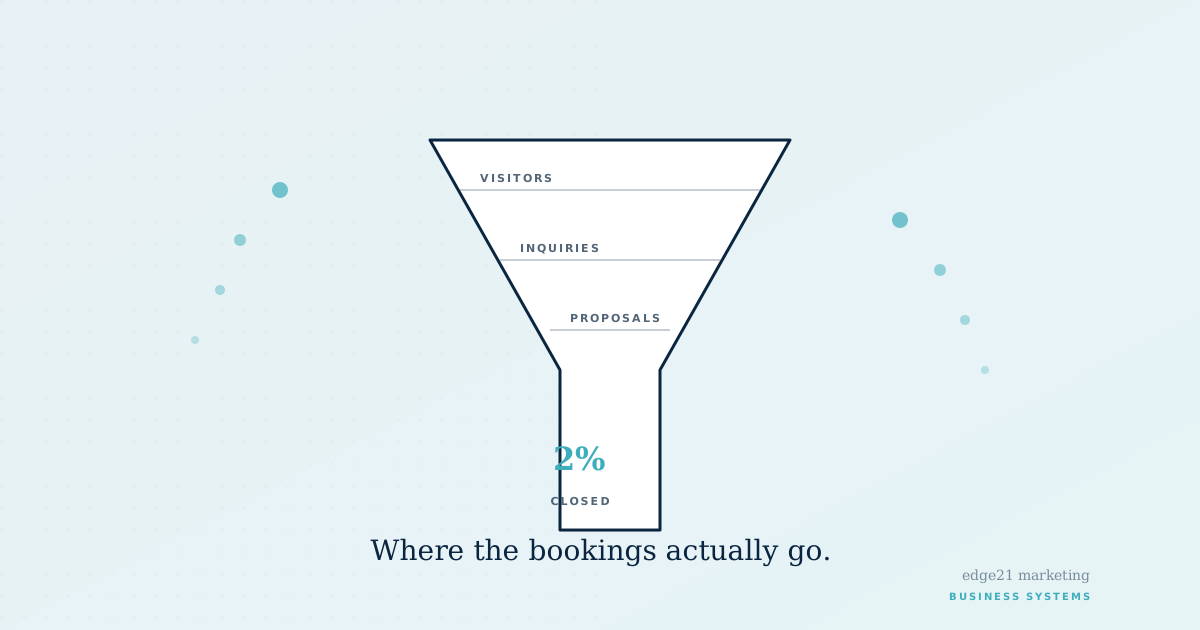
When a service business has a revenue problem, the default move is to chase more leads. More content, more ads, more outreach, more visibility. Top-of-funnel work is satisfying because it's measurable. You can see the followers, the impressions, the page views. Edge21 Marketing watches owners spend thousands on this every month while the actual leak sits one floor below.
What's harder to see is everything that happens after a lead becomes interested. The unglamorous middle of the journey, where most of the money actually disappears.
If you've ever wondered why your numbers don't match how busy you feel, the client journey is usually where to look. There are five specific places service businesses leak bookings, and almost everybody has at least three of them active right now. Plenty of businesses have all five running quietly in the background, which is why the lead flow can look fine on paper while the bookings still don't add up.
Leak #1: The first impression doesn't filter or convert
A lead lands on your website, your profile, or your service page. They have 10 to 30 seconds to decide whether you're worth a closer look. Most service business websites use those 10 seconds to introduce themselves with a vague tagline and a stock photo of a woman laughing at a salad.
By second 12, the buyer is gone. They were ready to be sold to. The site wasn't ready to do the selling. The salad photo did nothing.
What this leak looks like in practice:
- Hero copy that says what you do in industry words, not buyer words
- No clear "who is this for" anywhere in the first scroll
- No proof element above the fold
- A call to action that says "Learn More" instead of telling the buyer what to do next
Fix: Rewrite the homepage to do four things in the first scroll. Name what you sell specifically, name who it's for specifically, show one piece of proof, and give one obvious next step. If the page can't do that, no amount of traffic will fix it. You're paying to send buyers to a page that asks them to figure you out.
Leak #2: The lead gets a slow or generic reply
The buyer DMs or fills out a form. They wait. The reply comes 8, 24, 48 hours later. By then they've moved on, contacted three other businesses, or lost the spark that made them reach out in the first place. The spark is the whole game and you missed it.
Worse: when the reply finally comes, it asks three questions instead of giving the buyer a clear path forward. "What kind of help are you looking for? What's your budget? When are you trying to start?" Now the buyer has to do work to keep talking to you. They don't.
Fix: First reply same day with a confirmation, a brief description of how the next step works, and one concrete thing for them to do. Booking link, intake form, or a clear recommendation. We covered this in detail in the follow-up gap article.
Leak #3: The proposal is weaker than the conversation
You had a great call. The buyer was excited. You said you'd send a proposal. Three days later, the buyer reads a generic PDF that lists services, prices, and a paragraph about your experience that nobody asked for.
The energy from the call is nowhere in the document. The proposal looks like every other proposal they've gotten this month. They go quiet. You wonder what happened. What happened is your proposal was paperwork instead of sales.
Most service business proposals are templates that the seller barely customized. They list deliverables. They list prices. They list company background nobody reads. They are, technically, proposals. They aren't selling anything.
What an effective proposal does instead:
- Restates the buyer's specific situation in their own words from the call
- Names the outcome you're going to help them reach
- Lays out the work in plain language, not industry jargon
- Removes the most common objections before they're raised
- Tells the buyer exactly how to say yes
The proposal is sales material, not paperwork. Most owners treat it like paperwork and then wonder why so many proposals don't close.
Leak #4: There's no plan for the "no" or the silence
Buyer says they need to think about it. Or they say they'll get back to you. Or they go quiet after the proposal and never come back. Common.
Most service businesses have no system for what happens next. They follow up once, awkwardly, and then either harass the lead with "just checking in" emails or let it slide entirely. Both extremes lose money. The first annoys good leads. The second forgets them.
What works instead is a structured nurture path. Three follow-ups across two weeks, each with a different angle. The first is light. The second offers something specifically useful (a related resource, a relevant case study, a clarifying question). The third is a clean close that opens the door to come back later without pressure.
After the third, the lead gets added to a quarterly check-in list. No more direct sales messages. Just a quiet, low-frequency reminder that you exist and the door is still open. Some of those leads come back six months later and book. The ones you forgot about don't.
Leak #5: The handoff after the yes is clunky
The lead finally says yes. They're excited. You're excited. Then the contract takes 5 days to send. The kickoff call is scheduled for "sometime next week." Onboarding involves three different emails, two different apps, and one phone call to figure out how anything is supposed to work.
By the time the actual work starts, the buyer has had two weeks of mild administrative friction. Some of them quietly downgrade their enthusiasm. Some of them ghost. Some of them complete the project but never refer you because the experience around the work felt rougher than the work itself. The work was good. The wrapper around it wasn't. People remember the wrapper.
What a clean handoff looks like:
- Contract sent within 48 hours of the yes
- Welcome email immediately after the contract is signed, with a clear one-page rundown of what happens next
- Kickoff call scheduled within 7 days, not "whenever works"
- One central place for all project assets, not scattered across email, Slack, and shared drives
The first 14 days of the engagement quietly decide whether the client refers you to other people, leaves a public review, or buys from you again. Most owners are too busy celebrating the close to set up the part that actually decides whether the work converts into reputation.
The five leaks (weak first impression, slow reply, generic proposal, no nurture for the no, clunky handoff) usually exist together. Fixing two or three of them often recovers more revenue than doubling the marketing budget would. And the fix is mostly free.
How to audit your own client journey
You don't need a consultant for this. You need an afternoon and a willingness to read your own materials like a stranger who isn't already convinced you're great.
- Open your homepage in a fresh browser, incognito mode. Time how long it takes to figure out what you sell, who it's for, and what to do next. If it's longer than 60 seconds, leak #1 is active.
- Check your last 10 lead replies. How fast did they go out? Did the first message give the buyer a clear next step? Or did it ask questions? If asking, leak #2 is active.
- Read your last proposal as if you were the buyer. Does it sound like the conversation you had on the call? Or does it sound like a template? If template, leak #3 is active.
- Pull up the last 5 leads who didn't book. What was your follow-up cadence? If you sent one message and gave up, or didn't follow up at all, leak #4 is active.
- Map the first 7 days of your last new client engagement. Was the contract fast? Was the kickoff scheduled clearly? Did they get one welcome message or three scattered ones? If scattered, leak #5 is active.
Most service businesses have at least three of these leaks running at the same time. Picking any one and fixing it tends to recover more bookings than the next round of paid ads.
Want the leak audit done for you?
The free audit asks the same questions a client journey audit would. About ten minutes. No upsell sequence afterward.
Take the Free AuditThe real wins are in the middle
Top-of-funnel work is necessary. You need new people finding the business. But the businesses that grow without burning out their owners are the ones that fix the middle and bottom of the journey first, then add traffic on top of a system that actually converts.
Most owners have it backwards. They're filling a leaky bucket faster instead of patching the holes. The bucket is the bigger problem. Always. And the bucket is usually free to fix. The traffic costs money every month forever.